Fiber-Optic Daylighting in Windowless ICUs
Field-deployed case study · Fiber-optic daylighting application
Engineering Constraints, Light Performance, and Clinical Considerations
Project Background
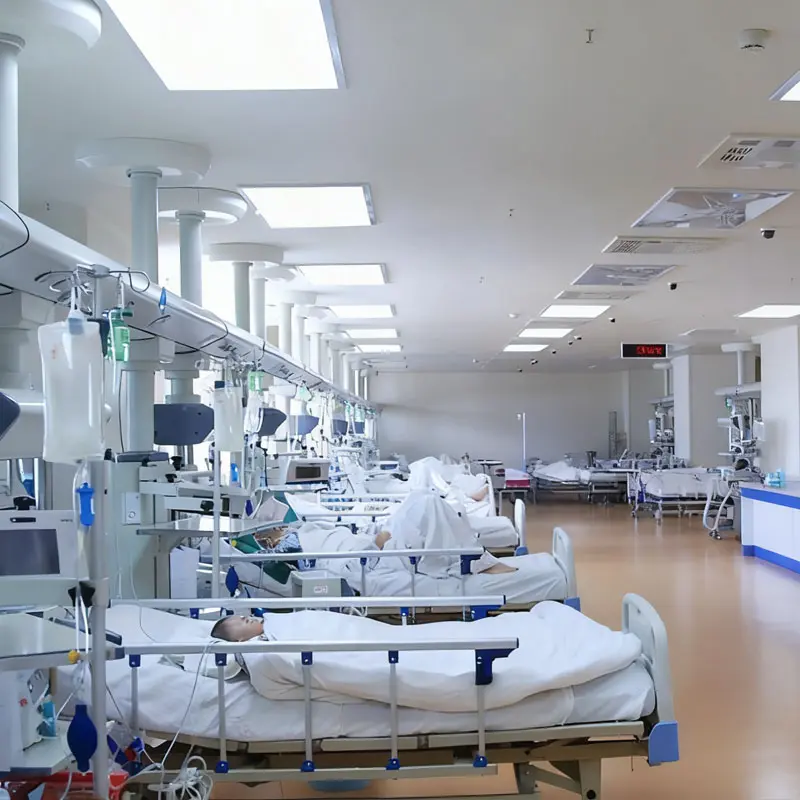
Intensive Care Units (ICUs) are among the most light-sensitive environments in modern healthcare facilities. In many existing hospitals, critical care rooms are fully enclosed or located deep within building cores, resulting in completely windowless spaces.
Numerous clinical studies have shown that access to natural daylight can positively influence circadian rhythm alignment, patient mood, and staff alertness. However, introducing daylight into ICUs presents strict engineering, safety, and operational constraints that conventional skylights or windows cannot satisfy.
Engineering Constraints in Windowless ICUs
Before selecting any daylighting solution, the following constraints were identified as non-negotiable:
- No direct solar radiation entering patient areas
- No ultraviolet (UV) or infrared (IR) exposure
- No additional heat load at the patient bed level
- Stable, flicker-free light output suitable for long-term patient exposure
- Minimal structural modification to the existing building
- Low maintenance requirements compatible with ICU operational schedules
These constraints immediately ruled out traditional daylighting approaches such as skylights, light wells, or reflective tubes.
Why Fiber-Optic Daylighting Was Selected
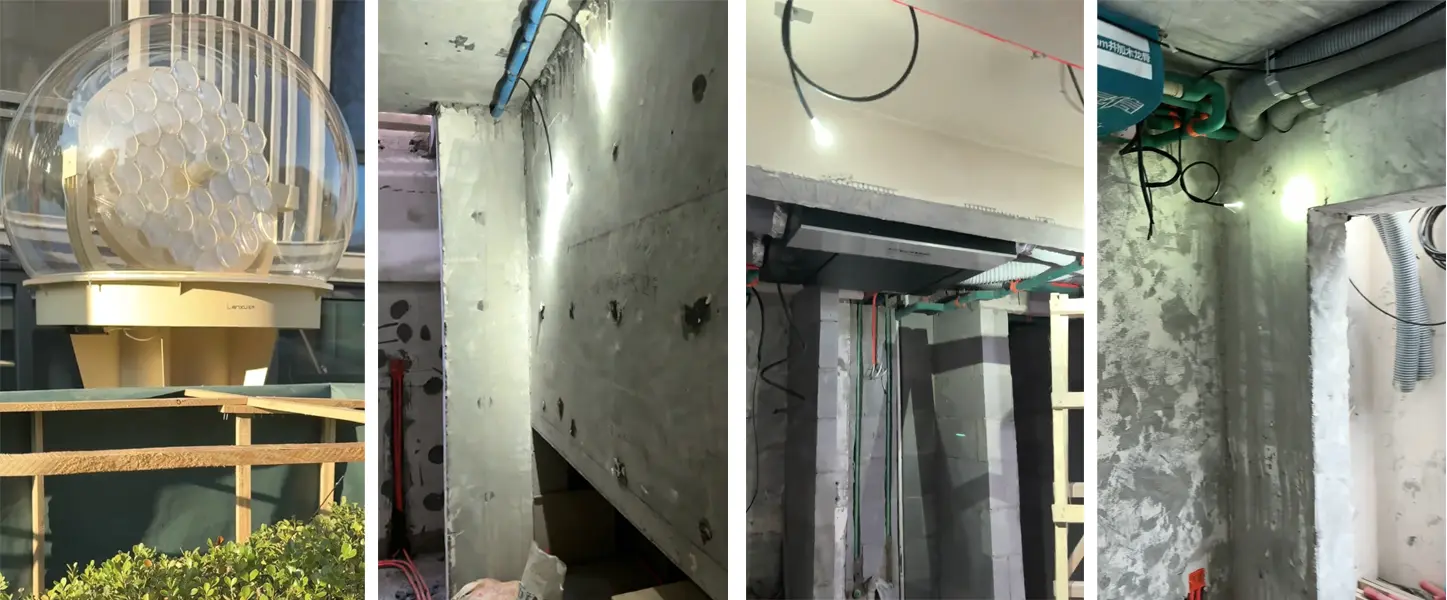
After evaluating multiple technologies, a fiber-optic daylighting approach was selected for this project. The system captures sunlight externally and transmits it indoors through high-purity optical fibers, physically separating the light source from the clinical environment.
In this project, a Dayluxa fiber-optic daylighting system was chosen based on the following engineering factors:
- Intrinsic filtering of UV and IR due to fiber transmission characteristics
- Negligible thermal transfer at the light diffuser
- Capability to deliver daylight over long distances without electrical conversion
- Compatibility with solar tracking for stable daytime light capture
- Modular installation with minimal disruption to existing ICU infrastructure
System Configuration and Performance Parameters
To ensure clinical suitability, system performance was evaluated using engineering-level metrics rather than visual impression alone.
- Target illuminance at patient bed: approximately 150–300 lux (daytime contribution)
- Optical fiber transmission length: approximately 30–50 meters
- Illuminance variation under clear sky conditions: within ±15–20%
- Measured temperature increase at diffuser: negligible (<1°C)
- UV / IR exposure: effectively eliminated by system design
Artificial lighting remained in place as the primary night-time illumination source, with daylight functioning as a circadian-supporting supplement rather than a full replacement.
Clinical and Operational Observations
From an operational standpoint, the fiber-optic daylighting system introduced no measurable increase in thermal load or maintenance complexity. The daylight output followed natural diurnal patterns, which is not achievable with fixed-spectrum electric lighting alone.
Importantly, the system design ensured that no direct view of the sun, moving shadows, or glare reached patients, addressing common concerns raised by clinical staff during early project discussions.
When Fiber-Optic Daylighting Is Not Suitable for ICUs
Despite its advantages, fiber-optic daylighting is not universally applicable. Based on this project and related deployments, the following limitations were identified:
- Regions with prolonged overcast conditions may experience limited daylight contribution
- Facilities unable to install external collectors or solar tracking units
- ICUs requiring fully constant, high-intensity illumination 24 hours a day
- Projects with no tolerance for daytime light variability
In such cases, advanced electric lighting systems with circadian tuning may be more appropriate.
Conclusion
This case demonstrates that fiber-optic daylighting can be a technically viable and clinically safe method for introducing natural daylight into windowless ICUs—when applied within clearly defined engineering boundaries.
Rather than replacing electric lighting, fiber-optic daylight functions best as a complementary system, delivering spectrally natural light without heat, UV, or glare.
For detailed technical background on fiber-optic daylighting systems, solar tracking accuracy, and optical transmission loss, refer to the related knowledge articles on Dayluxa.