How to Know If You Need Fiber Optic Daylighting
How to Know If You Need Fiber Optic Daylighting
A Technical Evaluation of Solar Spectrum Transmission and Architectural Integration.
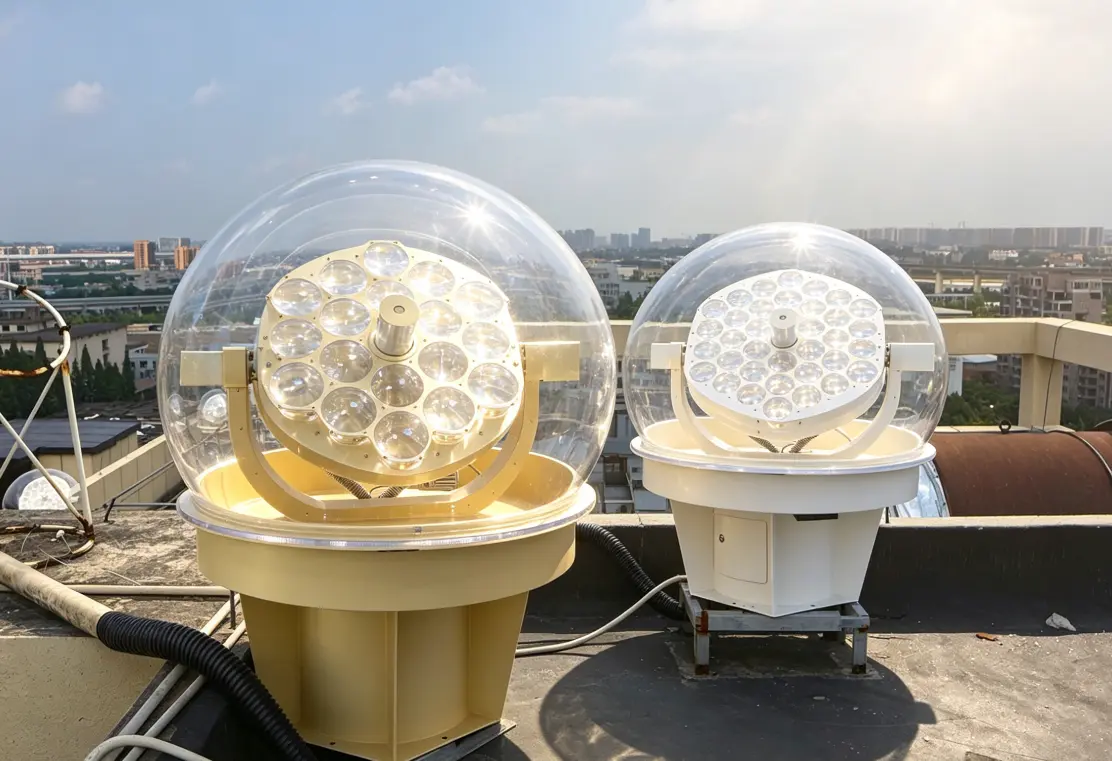
The decision to implement a Fiber Optic Daylighting (FOD) system—such as the Dayluxa DY or DP series—is driven by specific architectural constraints and the biological necessity of the full solar spectrum[cite: 1]. Unlike traditional windows or light tubes, FOD systems decouple the light collector from the emitter using high-purity silica glass or polymer-clad fibers[cite: 1].
Evaluate your requirements against the following five technical criteria to determine if this technology is the optimal solution for your facility.
01. Architectural Depth and Structural Constraints
Standard daylighting (windows and skylights) loses efficacy as the distance from the building envelope increases. You likely need a fiber optic solution if:
- The "Core" Problem: Your target space is located more than 10 meters from any exterior wall or roof surface.
- Vertical Transmission: Light must travel through multiple floors. Dayluxa systems can transmit light effectively over distances of 30m, 50m, or even 100m[cite: 2].
- Structural Integrity: You cannot install large-diameter light pipes. Dayluxa C-1500/1700 fibers have a cable outer diameter of only 3.0mm ± 0.1mm.
Bending Radius Flexibility
The silica fiber supports a long-term bending radius of ≥300mm, allowing for non-invasive routing through existing HVAC and electrical plenums.
02. Requirement for Full-Spectrum "Live" Sunlight
If your application requires the spectral fingerprints of the sun rather than a "daylight-balanced" LED, FOD is mandatory. Artificial light often fails to replicate the dynamic nature of solar energy.
Circadian Entrainment
For ICU environments or underground workspaces, the human body requires the dynamic shifts in color temperature and intensity that only real sunlight provides to regulate biological rhythms.
Low OH Silica Transmission
Utilizing pure low-OH silica cores ensures that the spectral integrity is maintained during transmission, particularly in the near-infrared (NIR) and visible ranges.
03. Precision Tracking and Luminous Efficacy
If you are in a location where sunlight is a premium resource, efficiency is key. Unlike passive skylights, the Dayluxa system ensures maximum capture through active alignment.
A single 100mm Fresnel lens can concentrate sunlight into a high-density fiber, providing an illuminance of 1100 lx even at a 30m distance[cite: 1, 2].
04. Application-Specific Technical Drivers
| Application | Technical Driver | Quantifiable Value |
|---|---|---|
| Museums | Spectral Purity | CRI 100 rendering while filtering UV/IR. |
| Healthcare | Circadian Stimuli | Stabilization of patient recovery in windowless environments. |
| Research Labs | Experimental Integrity | Natural light "control" for solar-response studies. |
| Aquaculture | Ecological Stability | Simulates natural photoperiods for coral and fish growth. |
05. Heat Management and Energy Balance
Traditional windows introduce a high Solar Heat Gain Coefficient (SHGC). FOD systems offer a "Cold Light" alternative:
Cold Light Transmission of visible spectrum while dissipating IR heat at the collector.
Hybrid Ready Integrated LED units ensure 24/7 reliability during non-sunny periods[cite: 1].
Low Attenuation Fiber loss is less than 10.0 dB/km at 1000nm wavelength.
System Specification Summary (C-1500/1700)
| Fiber Type | C-1500/1700 |
|---|---|
| Numerical Aperture (NA) | 0.37 ± 0.02 |
| Core Material | Pure Low OH Silica Glass |
| Continuous Usage Temp | -60°C ~ 125°C |
| Transmission Loss | < 10.0 Db/km @ 1000nm |