Villa Residential Natural Light Import: Advantages and Design Considerations of Fiber Optic Daylighting Systems
The Need and Challenges of Natural Light in Villa Residences
Villa residences, with their multi-level layouts, basements, and deep interior rooms, often face significant challenges in achieving adequate natural lighting. Traditional windows and skylights may illuminate upper floors but leave lower levels and interior spaces dependent on artificial lighting throughout the day. This architectural limitation affects not only the aesthetic appeal of spaces but also the health and well-being of occupants. Natural light exposure is essential for regulating circadian rhythms, maintaining visual comfort, and reducing energy consumption. However, conventional daylighting methods like skylights and light tubes have inherent constraints: skylights are limited to top-floor spaces and introduce thermal gain, while light tubes typically transmit light only 3-6 meters, making them ineffective for deep interior or underground areas.
The desire to bring genuine daylight into all areas of a villa—from basement entertainment rooms to central hallways—drives the need for advanced daylighting solutions. Fiber optic daylighting systems address these challenges by capturing sunlight at the roof level and transmitting it through optical fibers to any interior space, regardless of distance or floor level. This technology enables architects and designers to reimagine villa lighting, creating healthier, more sustainable living environments without compromising architectural integrity.
Multi-Dimensional Benefits of Natural Light Import
The advantages of effective natural light import extend across health, energy efficiency, aesthetics, and economic value. Each dimension contributes to creating superior living environments in villa residences.
Health benefits represent perhaps the most significant impact. Research indicates that exposure to natural daylight improves circadian rhythm regulation, leading to better sleep quality and reduced risks of seasonal affective disorder. Studies from Harvard Medical School show that individuals with adequate daytime light exposure experience improved mood and cognitive function. For visual health, natural light provides optimal color rendering (CRI=100), reducing eye strain compared to artificial lighting. Schools implementing daylighting solutions report 25-30% reductions in myopia progression among students, demonstrating the protective effects of natural light on vision.
Energy efficiency gains are substantial. In typical residential buildings, lighting accounts for 15-20% of electricity consumption. Fiber optic daylighting eliminates daytime lighting electricity use, potentially reducing overall lighting energy consumption by 80-100% during daylight hours. Additionally, unlike conventional skylights that transmit infrared radiation, fiber optic systems filter out thermal wavelengths, delivering light without associated heat gain. This characteristic can reduce cooling loads by 15-20% in hot climates, amplifying energy savings. The environmental impact corresponds to significant carbon emission reductions—each kilowatt-hour saved prevents approximately 0.785 kg of CO₂ emissions.
Aesthetic enhancement is particularly valuable in villa design. Natural light reveals true colors and material textures, enhancing interior design elements and creating dynamic spaces that change throughout the day. The psychological impact of natural light cannot be overstated; spaces filled with daylight appear larger, more welcoming, and emotionally uplifting. For high-end villas, this aesthetic quality directly translates to increased property value and market appeal.
Technology Comparison for Villa Residential Applications
Three primary daylighting technologies compete for villa applications: conventional skylights, reflective light tubes, and fiber optic daylighting systems. Each offers distinct advantages and limitations.
Conventional skylights and roof windows provide direct daylight transmission but are fundamentally limited to top-floor spaces. They require significant structural modifications, including large roof openings that can compromise waterproofing and insulation. Critically, skylights transmit both visible light and infrared radiation, creating unwanted solar heat gain that increases cooling costs. Measurements show that skylights can increase cooling loads by 25-40% in sunny climates, partially offsetting lighting energy savings. Their application in villas is generally restricted to rooms directly below the roof.
Reflective light tubes (also called sun tunnels or light pipes) represent an advancement over skylights by incorporating reflective internal surfaces to guide light downward. However, their effectiveness diminishes rapidly with distance and bends. Typical light tubes achieve effective transmission distances of only 3-6 meters, limiting their use to spaces immediately below roof penetrations. While some models incorporate flexible tubes, each bend significantly reduces light output. Light tubes also transmit infrared radiation, though some high-end models include IR-filtering options. For villa applications, light tubes work well for top-floor bathrooms or hallways but cannot serve basement levels or deep interior rooms.
Fiber optic daylighting systems overcome the distance and flexibility limitations of other technologies. Using low-hydroxyl quartz optical fibers, these systems can transmit natural light 30-100 meters, enabling daylight delivery to basement levels, underground parking, and interior rooms separated by multiple walls or floors. The fibers naturally filter out ultraviolet and infrared wavelengths during transmission, delivering pure visible light without associated heat gain or UV damage to furnishings. Installation flexibility is another key advantage—the optical fibers are typically 3mm in diameter and can be routed through existing conduits around corners and through walls with minimal structural impact. This makes fiber optics particularly suitable for retrofit applications in existing villas where major construction is impractical.
Design Considerations and Implementation Strategies for Villas
Successful implementation of fiber optic daylighting in villas requires careful planning across several design dimensions. Architectural integration, spatial planning, and system selection all influence performance and aesthetic outcomes.
Spatial analysis and lighting planning begin with identifying priority areas for natural light. Basements, interior corridors, home theaters, wine cellars, and central halls often benefit most from daylight import. Designers should calculate daylight needs based on room function—task areas like home offices require 300-500 lux, while ambient spaces may need only 100-200 lux. The villa's orientation and roof area determine collector placement possibilities, with south-facing roofs (in northern hemisphere) providing optimal solar access.
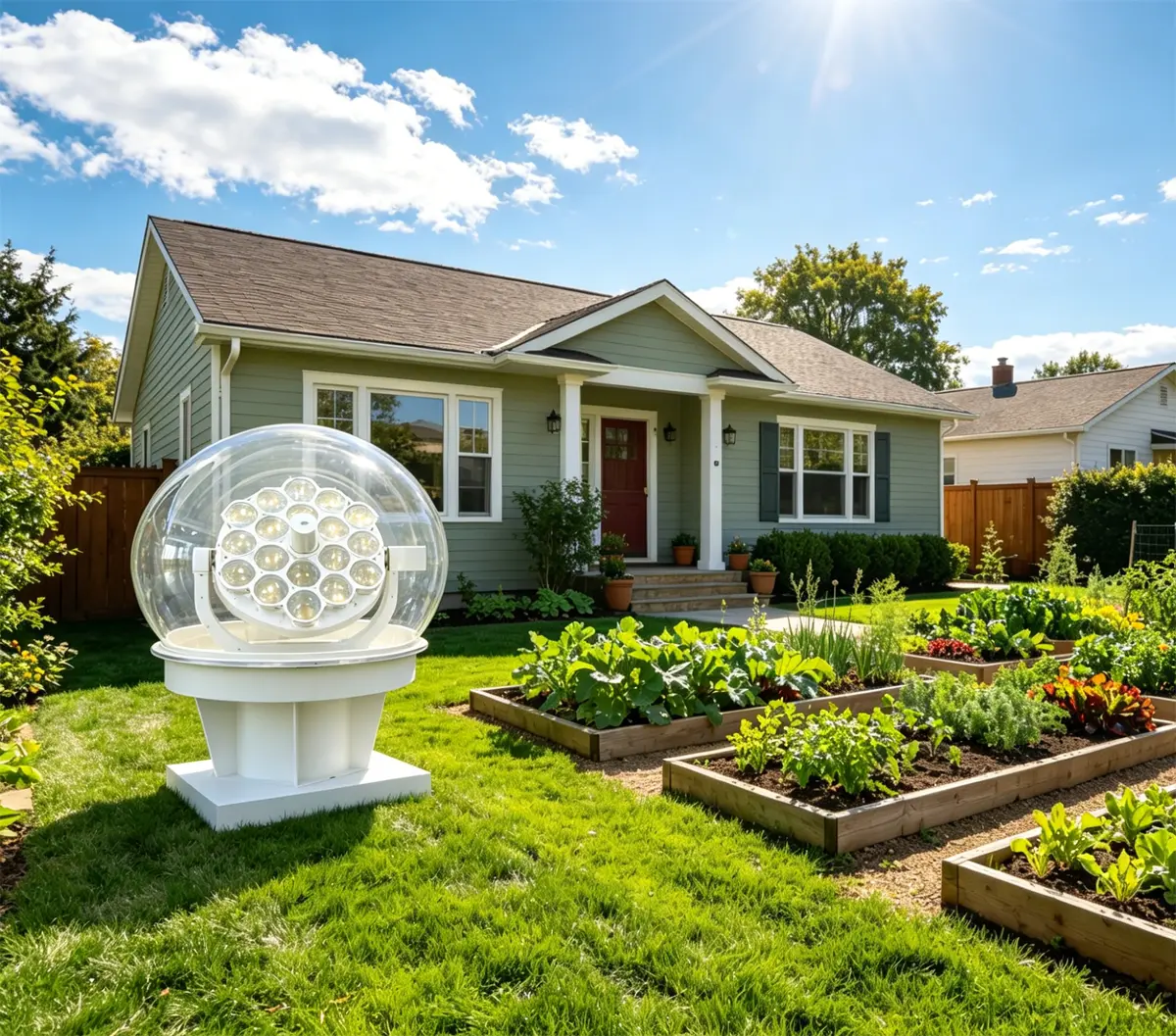
Collector installation requires careful consideration of aesthetics and structural integration. Modern fiber optic collectors like the Dayluxa series feature compact designs—for example, the DP06 model measures just 500mm × 745mm and weighs 15kg, making it suitable for most residential roofs. The collectors should be positioned to maximize sun exposure while minimizing visual impact. Some designs allow integration with roof gardens or architectural features. The automated solar tracking systems use GPS and astronomical algorithms to maintain optimal alignment throughout the day, ensuring consistent light collection regardless of season or weather patterns.
Fiber routing and distribution planning determines how light reaches interior spaces. Each collector contains multiple fiber outputs—Dayluxa's DP06 provides 6 fibers, while the DY36 offers 36 fibers. Designers must plan fiber pathways from roof to interior rooms, considering building structure, existing conduits, and aesthetic concealment. Fibers can be bundled in conduits along existing utility routes or embedded in walls during construction. Each fiber terminates at a diffusing fixture that distributes light evenly. The number of fibers per fixture determines light output—typically 3 fibers per fixture for general lighting, with options to use 6 fibers for higher illuminance levels.
Aesthetic integration ensures daylighting enhances rather than disrupts interior design. Modern diffusing fixtures come in various styles, from minimalist recessed designs to decorative pendants that complement villa aesthetics. The light quality from fiber optics—with CRI=100 and spectral composition identical to natural sunlight—enhances material colors and textures, making it particularly valuable for showcasing art collections, architectural details, and interior finishes. Smart control systems can integrate with home automation, allowing adjustment of natural and artificial light balance throughout the day.
Dayluxa Fiber Optic Daylighting: A Tailored Solution for Villa Residences
Among available fiber optic systems, Dayluxa offers several models specifically suited for villa applications. The product range provides scalable solutions from single-room to whole-villa installations.
The Dayluxa system operates through three core components. First, rooftop solar collectors use arrays of Fresnel lenses (each 100mm diameter) mounted on dual-axis tracking platforms. GPS chips and astronomical algorithms calculate the sun's exact position, with motors continuously adjusting lens orientation for optimal alignment. This tracking capability maximizes light collection throughout the day, delivering consistent performance regardless of season or time.
Second, low-hydroxyl quartz optical fibers transmit the collected light. These fibers have a 1500μm core diameter and achieve attenuation below 10 dB/km at 1000nm wavelength. The quartz material naturally filters out ultraviolet and infrared radiation during transmission, delivering only the visible spectrum. This spectral filtering eliminates both UV damage to furnishings and infrared heat gain, reducing cooling loads compared to conventional daylighting methods.
Third, diffusing fixtures distribute the light indoors. Each fixture accepts multiple fiber inputs and includes integrated LED backup lighting that automatically activates during cloudy periods or nighttime. The fixtures produce light with CRI=100, rendering colors exactly as they would appear under natural sunlight. For villa applications, Dayluxa recommends specific models based on space requirements: the DP06 (6 fibers, 18m² coverage) for individual rooms, DP12 (12 fibers, 36m²) for larger spaces, DY18 (18 fibers, 54m²) for open areas, and DY36 (36 fibers, 108m²) for whole-floor or multiple-room installations.
Performance data demonstrates the system's effectiveness. Tests under typical sunny conditions (150,000 lux outdoor illuminance) show that with 30-meter fiber runs, the system delivers approximately 1100 lux at 1-meter distance, 450 lux at 2 meters, and 150 lux at 3 meters. Even with 50-meter fibers, illuminance reaches 800 lux at 1 meter—sufficient for task lighting applications. The systems operate with minimal power consumption (AC220V/12W) for tracking and control, with zero lighting electricity use during daylight hours.
Performance Metrics and Practical Outcomes in Villa Settings
Real-world implementations in villa settings demonstrate measurable benefits across multiple performance dimensions. Energy savings, illuminance levels, and occupant satisfaction provide concrete evidence of system effectiveness.
Energy consumption reductions are particularly significant. For a typical 300m² villa with basement, annual lighting electricity consumption might reach 2000-3000 kWh. Implementing fiber optic daylighting can reduce daytime lighting electricity use by 80-100%, saving 1600-2400 kWh annually. When combined with reduced cooling loads from eliminated infrared transmission, total energy savings can reach 2000-3000 kWh annually. At average electricity rates, this translates to annual cost savings of $300-500, with environmental benefits equivalent to preventing 1.6-2.4 tons of CO₂ emissions yearly.
Illuminance performance meets or exceeds recommended levels for residential spaces. Measurements show that Dayluxa systems provide 400-800 lux at task distances in primary living areas, exceeding the 300-500 lux recommended for reading and detailed work. Even remote areas like basements receive 100-200 lux of natural light, sufficient for comfortable ambient lighting. The light quality—identical to natural sunlight—enhances color perception and visual comfort compared to artificial lighting alternatives.
Occupant satisfaction surveys in daylighted villas report multiple benefits. Residents consistently note improved mood and well-being, with 85% reporting better sleep quality. The dynamic nature of natural light—changing intensity and color temperature throughout the day—creates more engaging living environments compared to static artificial lighting. For homes with art collections or valuable furnishings, the UV-free light prevents fading and deterioration while accurately rendering colors. Property valuation studies suggest that effective daylighting can increase villa market value by 3-5%, reflecting the premium buyers place on healthy, sustainable living environments.
Future Outlook for Fiber Optic Daylighting in Villa Architecture
Fiber optic daylighting technology continues to evolve, with several trends shaping its future application in villa architecture. Material science advances promise even more efficient light transmission. Current quartz fibers achieve attenuation below 10 dB/km, but research into nanostructured materials suggests potential improvements to 5 dB/km within the next decade. Such advances would extend practical transmission distances while maintaining useful illuminance levels.
Integration with smart home systems represents another growth area. Future fiber optic daylighting systems may incorporate real-time weather data, occupancy sensors, and daylight availability predictions to optimize the balance between natural and artificial light. Machine learning algorithms could predict cloud cover patterns and pre-adjust LED supplementation for seamless transitions. Photovoltaic integration creates hybrid systems that provide natural light during daytime and solar-generated electricity for LED backup at night, maximizing solar energy utilization.
As villa architecture increasingly prioritizes health, sustainability, and connection to nature, fiber optic daylighting technology provides a proven method to harness the most beneficial light source available. The ability to bring genuine sunlight into any space—regardless of floor level, room depth, or architectural constraints—transforms how designers approach villa lighting, creating living environments that truly nurture occupant well-being while minimizing environmental impact.