Natural Lighting System
Field-deployed case study · Fiber-optic daylighting application
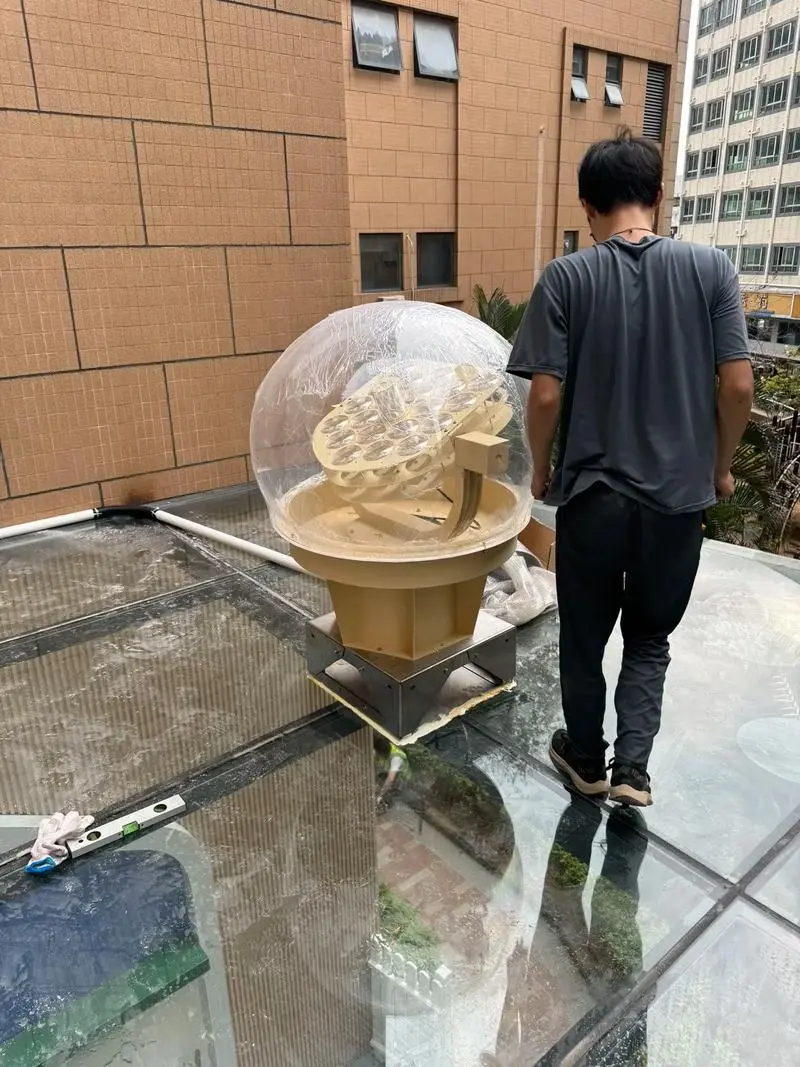
Natural Lighting System: Principles, Performance Metrics, and Engineering Feasibility
A Natural Lighting System is an engineered solution designed to deliver natural daylight into interior spaces by directly capturing and transmitting sunlight, rather than converting it into electricity and reproducing it artificially. In modern building design, natural lighting systems are increasingly evaluated not as decorative features, but as functional components of the indoor light environment.
1. What Is a Natural Lighting System?
In architectural and engineering contexts, a Natural Lighting System refers to any system that introduces outdoor natural light into indoor spaces in a controlled and predictable manner. Unlike conventional electric lighting, these systems preserve the original spectral characteristics of sunlight.
From a technical perspective, natural lighting solutions can be broadly categorized into three approaches:
- Passive daylighting: windows, skylights, atriums
- Reflective or light-guiding systems: light shelves, tubular daylight devices (TDDs)
- Fiber optic daylighting systems: concentrated sunlight transmitted via optical fiber
Among these, fiber-based systems stand out for their ability to transport daylight over long distances and deliver it into windowless or deep-plan spaces.
2. Key Performance Metrics of Natural Lighting Systems
From an engineering standpoint, evaluating a Natural Lighting System requires more than assessing perceived brightness. At minimum, five performance dimensions must be considered.
2.1 Illuminance (lux)
Typical illuminance targets for indoor environments include:
- Office spaces: 300–500 lux
- Healthcare and laboratories: 500–1000 lux
- Corridors and underground spaces: 100–300 lux
A viable natural lighting system must deliver usable illuminance under stable operating conditions, rather than relying on occasional peak sunlight.
2.2 Transmission Loss and Distance
All daylighting systems experience optical losses, but the dominant loss mechanisms vary by technology:
| Technology | Primary Loss Mechanism |
|---|---|
| Light pipes (TDDs) | Multiple internal reflections |
| Mirror-based systems | Surface contamination and angular misalignment |
| Fiber optic systems | Material absorption and bending loss |
High-purity silica optical fiber exhibits low attenuation across the visible and near-infrared spectrum. According to Dayluxa fiber specifications, attenuation at 1000 nm is below 10 dB/km, indicating that material absorption is not the limiting factor at building-scale distances (50–150 m).
2.3 Spectral Quality and Human-Centric Lighting
The value of natural light extends beyond illuminance. Sunlight provides a continuous spectrum with:
- Near-perfect color rendering (CRI ≈ 100)
- Balanced visible and near-infrared components
- Physiological relevance to human circadian rhythms
Peer-reviewed lighting and building science research consistently shows that occupants exposed to natural daylight demonstrate improved alertness, visual comfort, and circadian alignment compared to purely artificial lighting environments.
2.4 Controllability and Stability
A fundamental engineering challenge of Natural Lighting Systems is that the sun is a dynamic light source. Solar altitude, azimuth, and irradiance change continuously throughout the day and across seasons.
Modern daylighting solutions address this challenge through:
- Multi-axis solar tracking mechanisms
- Real-time alignment correction
- Stabilized output optics at the delivery point
In Dayluxa systems, sunlight is actively tracked and continuously aligned with the optical collection system, improving coupling efficiency and reducing output fluctuation.
2.5 Durability and Safety
Natural lighting systems are often installed on rooftops or building envelopes, where long-term durability is critical. Key parameters include:
- Operating temperature range
- Minimum bending radius
- Resistance to UV exposure and aging
The low-OH silica optical fiber used in Dayluxa systems supports continuous operation from −60 °C to 125 °C, with a long-term bending radius of at least 300 mm, providing a substantial safety margin for architectural deployment.
3. How Fiber Optic Natural Lighting Systems Work
A fiber optic Natural Lighting System typically consists of three functional subsystems:
3.1 Light Collection
High-precision Fresnel lenses or concentrators collect direct sunlight and focus it onto the fiber input aperture. Active solar tracking maximizes the effective collection window throughout the day.
3.2 Light Transmission
Captured sunlight is transmitted through high-purity silica optical fiber via total internal reflection. The numerical aperture (NA) of the fiber determines the acceptable range of incident angles. Dayluxa fibers feature an NA of approximately 0.37, providing improved tolerance to alignment variations.
3.3 Light Distribution
At the output end, optical diffusers and luminaires convert the concentrated light into usable, glare-controlled illumination suitable for occupied spaces.
Unlike rigid light pipes, optical fibers allow flexible routing around structural obstacles, enabling daylight delivery into spaces far removed from the building envelope.
4. Applications and Limitations of Natural Lighting Systems
It is important to acknowledge that Natural Lighting Systems are not universally applicable. Their value depends heavily on context.
Suitable Applications
- Windowless or deep-plan spaces
- Healthcare, education, and research facilities
- High-performance offices and wellness environments
- Buildings prioritizing human-centric lighting quality
Limitations
- Cost-sensitive or temporary buildings
- Applications requiring perfectly constant illuminance without variation
- Regions with extremely poor solar availability
As a result, natural lighting should be viewed as an environmental quality system rather than a direct replacement for electric lighting.
5. Conclusion
From an engineering and building science perspective, the primary value of a Natural Lighting System lies in its ability to deliver authentic daylight into spaces where windows and skylights are impractical.
When designed with careful attention to optical losses, spectral integrity, tracking accuracy, and long-term durability, such systems can play a meaningful role in high-performance buildings.
Fiber optic daylighting solutions such as those developed by Dayluxa represent an effort to balance engineering control with the inherent benefits of natural sunlight, enabling daylight to be treated as a managed building resource rather than a passive byproduct of architecture.